
IGI vs. GIA for Lab-Grown Diamonds
Reflects GIA's policy effective October 1, 2025
For laboratory-grown diamonds, the old comparison between IGI and GIA no longer exists. Since October 1, 2025, GIA no longer issues color and clarity grades for laboratory-grown diamonds — new submissions receive only a Premium or Standard designation, which means IGI is now effectively the only major laboratory issuing full 4Cs on a lab-grown stone.
Most published comparisons of the two laboratories were written before that date. This Operia guide explains what changed, what GIA's new designations mean, and how to read and verify a lab-grown diamond report today.
What changed at GIA in October 2025?
GIA announced the change on June 2, 2025, and published the details of its replacement on August 26, 2025. Old-style reports, with color and clarity grades, remained available through September 30, 2025. From October 1, every laboratory-grown diamond submitted to GIA receives the GIA Laboratory-Grown Diamond Quality Assessment instead: a rating of Premium or Standard, or no designation if the stone falls below Standard. Reports issued before the change remain valid.
GIA based the decision on its own submissions. Since 2022, 95 percent of the laboratory-grown diamonds submitted to GIA were D to F in color, and 98 percent were VS1 clarity or better.
“More than 95% of laboratory-grown diamonds entering the market fall into a very narrow range of color and clarity. Because of that, it is no longer relevant for GIA to describe man-made diamonds using the nomenclature created for the continuum of color and clarity of natural diamonds.”
What do Premium and Standard mean?
GIA assesses each laboratory-grown diamond against two sets of criteria. A stone must meet every Premium criterion to be classified Premium. A stone that meets any combination of the Premium criteria and the Standard minimums is classified Standard. A stone that falls below Standard receives no designation.
| Criterion | Premium | Standard |
|---|---|---|
| Clarity | VVS or higher | VS |
| Color | D | E–J |
| Polish | Excellent | Very Good |
| Symmetry | Excellent | Very Good (Good for fancy shapes) |
| Cut | Excellent (round brilliant only) | Very Good (round brilliant only) |
How the assessment works
Why does this matter more for large diamonds?
Under the new system, a 20-carat diamond of D color and VVS clarity with an Excellent cut receives the same designation as a 1-carat diamond of the same quality: Premium.
The designations also group together grades that the traditional scales keep separate. Premium covers every clarity grade from VVS upward. Standard covers both VS1 and VS2, and six color grades, E through J. Under these criteria, a stone of D color and VS1 clarity is classified Standard, as is a stone of J color and VS2 clarity, provided both meet the polish, symmetry and cut minimums.
How the designations map onto the traditional scales
Color
Clarity
GIA's rationale holds for the market as a whole, where most laboratory-grown stones sit in a narrow band. But a buyer choosing a large diamond is choosing within that band. Color and inclusions are easier to see in a bigger stone, so at five carats and above, the step from one grade to the next is a real part of what the buyer is paying for. The Premium and Standard designations compress exactly that distinction.
How has the industry responded?
For scale: GIA grades fewer than 5 percent of the laboratory-grown diamonds on the market.
The Natural Diamond Council called the change “a definitive moment in the ongoing separation of natural diamonds from lab-grown diamonds.”
ALTR's CEO read it differently, describing the move as “less like innovation and more like repositioning after failing to dominate market share.”
GIA's own explanation is the one given above: its submission data shows laboratory-grown production clustered so tightly at the top of the scale that the natural-diamond nomenclature is no longer the right way to describe these stones.
What does an IGI report still include?
AGS Laboratories closed at the end of 2022, and GIA no longer issues color and clarity grades for laboratory-grown diamonds. That leaves IGI effectively the only major laboratory still grading them on the full 4Cs. AGS's own FAQ was explicit about what its closure meant: “Once AGS Laboratories closes, there will be no diamond grading laboratory that grades to the AGS Diamond Grading Standards.” GIA now offers an AGS Ideal Report for an additional $25, graded using GIA's own cut methodology.
An IGI report for a laboratory-grown diamond includes:
How to verify an IGI report
-
1
Enter the report number printed on your IGI report at lookup.igi.org. Verification is free.
-
2
Confirm that the online record matches your printed report in every detail, including shape, measurements, carat weight and each grade.
-
3
Under a 10x loupe, check the girdle inscription. It should begin with “LG” and match your report number.
What if I hold a GIA report from before October 2025?
It remains valid. GIA issued old-style reports for laboratory-grown diamonds, with color and clarity grades, through September 30, 2025, and has stated that existing reports remain valid.
What has changed is what GIA issues now. A laboratory-grown diamond submitted to GIA on or after October 1, 2025, receives the Quality Assessment rather than color and clarity grades, so your report records grades GIA no longer assigns to laboratory-grown stones. If you want a current report with full 4Cs grading, IGI still issues one.
The Operia Standard
IGI-certified ✔
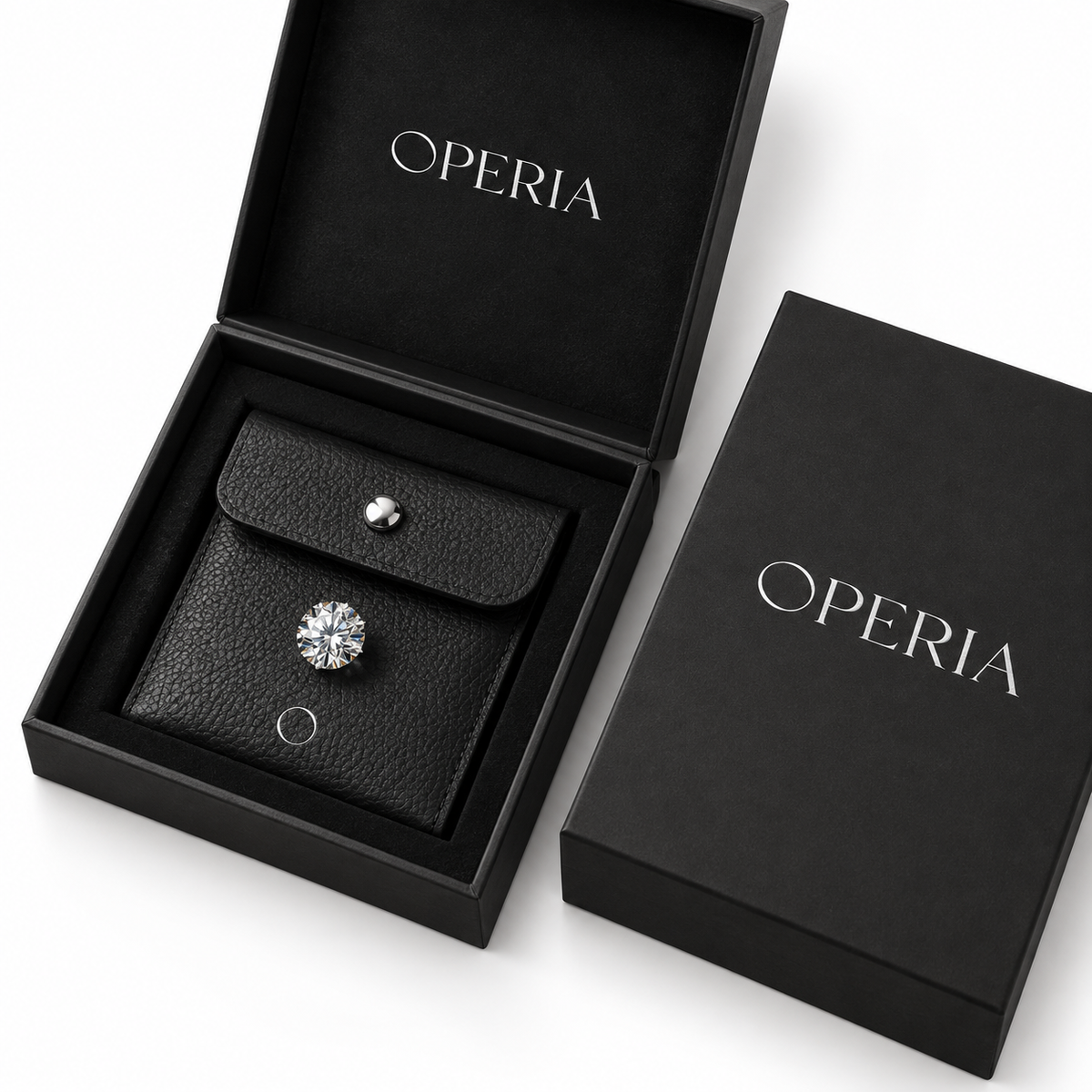
At Operia, every diamond is certified by IGI. Each one carries the full 4Cs grading described in this guide, including color, clarity, cut, polish and symmetry, and each report can be verified independently at lookup.igi.org.
Frequently asked questions
Does GIA still grade lab-grown diamonds?+
GIA still accepts laboratory-grown diamonds, but since October 1, 2025, it no longer issues color and clarity grades for them. New submissions receive a Premium or Standard designation, or no designation if the stone falls below Standard.
Which laboratory issues full 4Cs grades for lab-grown diamonds?+
IGI is now effectively the only major laboratory issuing full 4Cs on a lab-grown stone. Its reports grade color from D to Z and clarity from IF to I3, with cut, polish and symmetry grades.
What does Premium mean on a GIA lab-grown assessment?+
A Premium stone meets every one of these criteria: D color, VVS clarity or higher, Excellent polish and symmetry, and, for round brilliants, an Excellent cut grade.
Is a GIA lab-grown report issued before October 2025 still valid?+
Yes. Reports issued before the change remain valid. Old-style reports, with color and clarity grades, were available through September 30, 2025.
How do I verify an IGI report?+
Enter the report number at lookup.igi.org, free of charge, and confirm the online record matches your printed report. The girdle inscription, which begins with “LG,” should match the report number.
Further guides
The Operia Standard
The standards behind every Operia diamond, and the certification that documents them.
Carat & Size Guide
What carat weight means for a diamond's size, from 5 to 10 carats.